
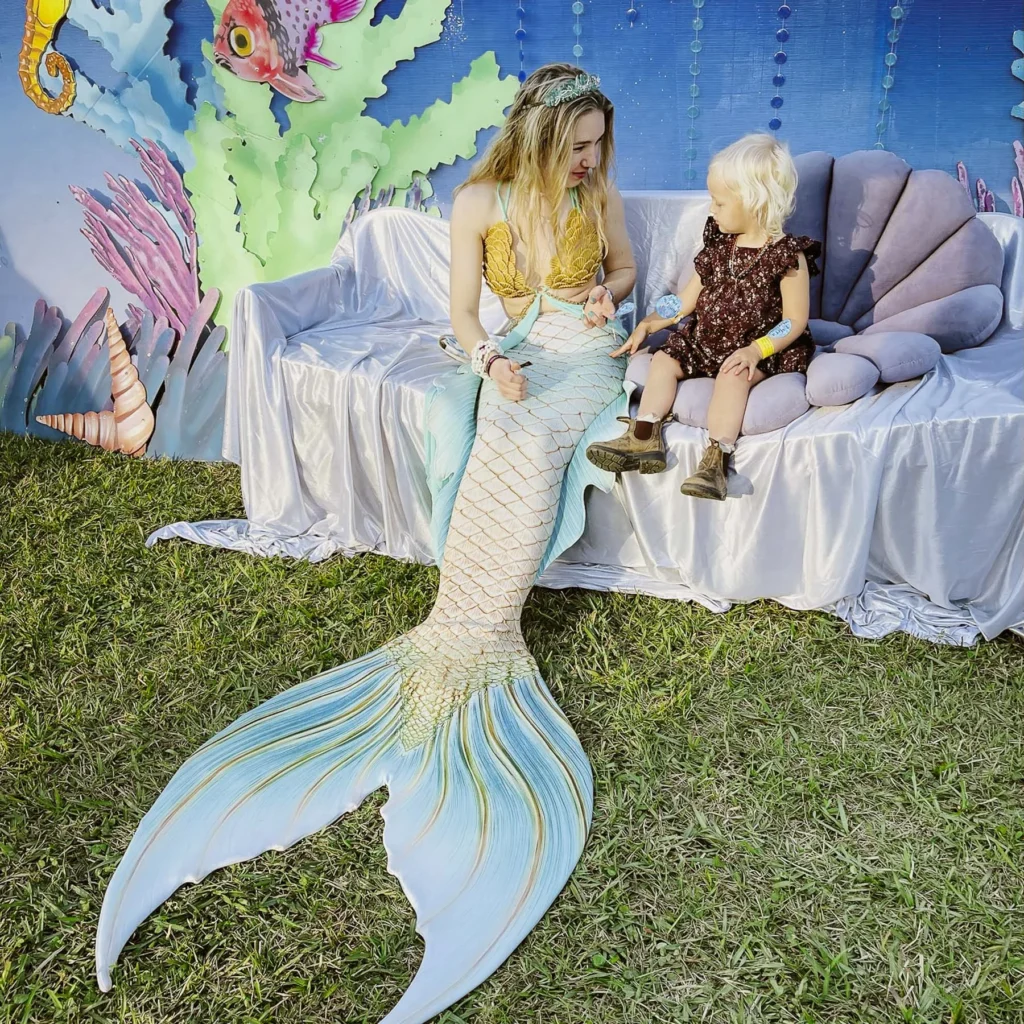
Event planning usually focuses on programming, logistics and the audience experience. But when families form part of that audience, one factor is consistently underestimated: the experience of the children.
When children aren’t properly considered, the impact doesn’t stay contained to one part of the event. It affects attendance, dwell time, spend, and how the event is remembered. Designing for children isn’t an extra cost. It’s a commercial decision that protects the value of everything else.
It’s Not Just About Keeping Kids Busy
There’s a common assumption that children just need something small to occupy them, a colouring table, a single entertainer, a face painter for an hour. In practice, this rarely works.
Children influence how long families stay, how much parents engage with the programming, and how the event feels overall. When kids are disengaged:
- Parents divide their attention between the event and managing their child
- Participation drops across activations and sessions
- The overall experience becomes fragmented for everyone in the family group
This isn’t a minor inconvenience. It directly affects the value the event delivers to attendees and to the organiser.
Shorter Stays, Lower Engagement
One of the most immediate impacts of poor child engagement is reduced dwell time.
When children become bored, overstimulated or unsettled, families leave earlier than planned. At large-scale public events, families regularly leave well before the program ends once children become overwhelmed, even when the adult programming is genuinely strong.
Even before leaving, parents step in and out of sessions, miss key moments, and disengage from the event entirely. For organisers, this translates into reduced audience retention, lower participation in programmed content, and missed opportunities for connection.
The Flow-On Effect on Spend and Atmosphere
Reduced dwell time has direct commercial consequences. When families leave early or disengage, it influences food and beverage spend, time spent across activations, sponsor visibility, and the overall energy of the event.
An event with relaxed, engaged families feels fundamentally different to one where parents are managing tired or overwhelmed children. The atmosphere shifts, and attendees feel it. So do sponsors and exhibitors who are paying for engaged audiences.
The Hidden Risk: Planning for Numbers That Don’t Hold
There’s a financial layer that often gets overlooked in planning conversations.
Organisers may scope children’s programming based on early registrations or attendance projections. Actual attendance can fluctuate significantly, particularly close to the event. Projections of 50-60 children frequently land at half that number, leaving organisers with unnecessary staffing costs and underutilised setup.
The opposite is also a risk. Underestimating numbers, or underestimating the type of engagement children need, creates the reverse problem: an under-resourced, overwhelmed space that delivers poor experience to the families who did show up.
Both directions cost money. Both damage the event experience. Neither happens when children’s programming is designed properly from the start.
What Actually Works
Children’s engagement needs to be designed, not added on. The most effective event environments for children include:
- Opportunities for movement and energy release through active play
- Creative, open-ended arts and crafts activities
- Quieter spaces where children can reset and regulate
- Experienced facilitators who can read the room and adjust
When these elements are in place, children settle and stay engaged. Parents can participate fully in the event. The whole experience flows. For more on the design principles behind this, see our piece on why a single kids activity isn’t enough at family events.
A Commercial Advantage, Not an Add-On
Events that properly consider children don’t just avoid problems. They gain an advantage. Longer dwell times. Higher engagement across the program. Stronger word-of-mouth from families. Better outcomes for sponsors and exhibitors.
For an example of what this looks like in practice, the Mini Mooland activation at Groovin the Moo shows how a dedicated, well-designed kids zone changes the family experience within a major music festival.
Children Aren’t a Side Consideration
For any event with families in the audience, children aren’t a side consideration. They are a key part of how the event functions and how it’s remembered. Ignoring this creates challenges in the moment and affects the broader success of the event. Designing for it creates a better outcome for everyone.
Plan a Family Event That Works
Kidzklub designs and delivers children’s programming for festivals, community events, corporate functions and venue activations across Australia. Whether you need a full festival kids zone, structured event childcare, or a curated entertainment activation, we work with organisers to design environments that support children, families and the event as a whole.
Get in touch to start a conversation about your event.