
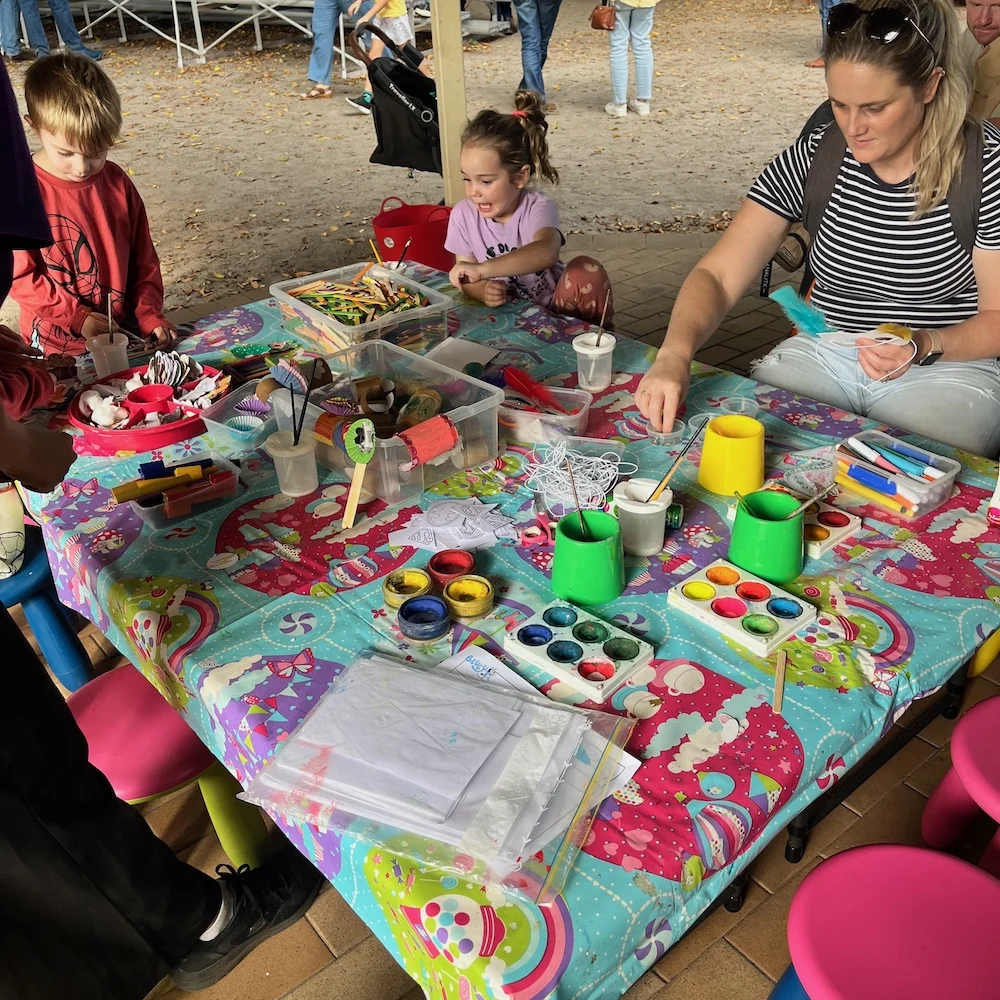
It’s one of the most common decisions in event planning: tick the family-friendly box by adding a single entertainer, a face painter, or a small activity table. It feels like a sensible, low-cost way to make an event welcoming for children.
In practice, it rarely works. Not because the activity itself is bad, but because it misunderstands how children actually engage in an event environment.
Children Don’t Engage in One Mode
Children don’t sit in one state for a sustained period. They cycle constantly between active, creative, social and restful modes, often within minutes. A single activity can hold attention briefly, but it can’t accommodate this natural shifting between states.
An event environment that offers only one type of engagement forces children into a mode they may not be in. The face painting queue is too long, the craft table feels overstimulating after twenty minutes, the entertainer is great but the child wants to move. The activity isn’t the problem. The lack of variety is.
The Role of Regulation
One of the most important needs in a busy event environment is the opportunity for a child’s nervous system to regulate. This doesn’t happen through passive distraction or watching a performance. It happens through movement and creative engagement.
When children can move their bodies or become genuinely absorbed in creative play, they naturally reset. Without that outlet, they become overstimulated quickly, particularly in high-energy environments like festivals, public events and busy venues.
This is why a kids zone needs to do more than entertain. It needs to give children the means to regulate themselves throughout the day.
Rest Isn’t Doing Nothing
“Rest” in an event context is often misunderstood. It doesn’t mean a beanbag in the corner with nothing to do. It means calm, thoughtfully designed activities that allow children to recharge in a way that works for them.
Quiet creative play, reading, puzzles, structured construction toys, these are restful for children even though they look like activity. What they share is that they don’t demand high social energy or sensory stimulation. The child is occupied but not amped.
Spaces that only offer high-energy options leave children no path back from overstimulation. Spaces with no quieter mode lose children to burnout well before the event ends.
What Children Actually Need at Events
A properly designed children’s environment provides the full range of modes children move through during a day:
- Movement and physical energy release through active play
- Creative engagement through open-ended arts, crafts and imaginative play
- Social interaction through group games and shared experiences
- Quieter zones for reset and regulation
- Skilled facilitators who can read the group and adjust the mix in real time
None of these elements is the whole answer. The point is to offer the range, then let children move between them as their state shifts.
What This Looks Like in Practice
A useful example is Mini Mooland at Groovin the Moo, a dedicated kids zone within a major Australian music festival. The activation was designed with multiple engagement zones running simultaneously: open-ended arts and crafts, active games, performance and dress-up, balloon twisting, face painting and roaming entertainment.
Children moved naturally between these zones throughout the day, regulating their own energy and engagement levels. The result was a space children stayed in for extended periods, even in the high-energy environment of a music festival.
A single face painter at the front gate would not have achieved this. The variety, and the deliberate design of the space, is what made it work.
It’s an Environment, Not an Activity
The shift in thinking is from “what activity do we add” to “what kind of environment do we create”.
An activity is something you add to an event. An environment is something you design. Activities are static and individual. Environments are dynamic and responsive. Children engage with environments. They consume activities.
For more on why this matters commercially, see our piece on the real cost of ignoring children at events.
Design Children’s Engagement Into Your Event
Kidzklub designs and delivers kids zones, festival activations and event programming for organisers across Australia. We work with festivals, councils, venues and event agencies to create environments that genuinely support children rather than just occupy them.
Get in touch to discuss how a properly designed children’s environment could work at your event.